Sunday, April 26, 2020

TODAY IN CRIME: April 27

photo credit: Ancient Origins

1521 Philippine natives led by chief Lapu-Lapu killed explorer Ferdinand Magellan on Mactan Island. Magellan was demanding the islanders bow to the king of Spain, pay tribute, and convert to Christianity.

1595 Turkish Ottoman Grand Vizier Sinan Pasha publicly incinerated the relics of Saint Sava in Belgrade in a symbolic gesture to quell the cleric-led Serbian uprising. Instead, it provoked the Serbs and empowered them to continue their fight for liberation.

1773 British Parliament passed the Tea Act, giving the East India Company huge tax breaks and a monopoly on the American tea trade.

1857 Lower Austria prohibited the establishment of Jewish communities.

1861 American President Abraham Lincoln suspended the writ of habeas corpus that protects the public against unlawful and indefinite imprisonment.

1865 The steamboat SS Sultana exploded in the Mississippi River, killing up to 1,800 of the 2,427 passengers. Most were paroled Union POWs on their way home. The boat was grossly overcrowded, the boilers leaky and mismanaged, and the captain notoriously corrupt and incompetent, but no one was ever held accountable for the greatest maritime disaster in U.S. history.

1940 Reichsführer-SS Himmler ordered the establishment of Auschwitz Concentration Camp, the largest Nazi concentration and extermination camp. Between 1.2 and 1.6 million people lost their lives there.

1945 Italian partisans captured fleeing dictator Benito Mussolini and his mistress as they attempted to slip into Switzerland. The two and their entourage were shot the next day.

1950 The apartheid government of South Africa passed the Group Areas Act No. 41. Creating different residential areas for each race, it forced physical separation and segregation between races to maintain dominance by the white minority. It was not repealed until 1990. This day in 1994 marked the second day of voting in the first post-apartheid general election in South Africa, when everyone over 18 was allowed to vote regardless of race.

1978 Members of the Soviet-backed People's Democratic Party of Afghanistan began the takeover of the city of Kabul, attacking government buildings and media outlets. Around midnight revolutionists assassinated self-proclaimed Afghan president Daoud and his family. The Saur Revolution established the Democratic Republic of Afghanistan and began a continuous series of armed conflicts there.

1978 Safford Federal Correctional Prison in Arizona released Domestic Affairs Adviser to President Nixon John D. Ehrlichman after he served 18 months of a 2- to 8- year sentence for Watergate-related crimes. He became a successful novelist after his release.

1982 John W. Hinckley Jr. went on trial in Washington, D.C., on attempted murder charges in the shooting of President Ronald Reagan. (He was charged with 13 offenses and found not guilty by reason of insanity.)

1986 An operations engineer at the Central Florida Teleport uplink station in Ocala, Florida jammed the Home Box Office satellite signal for almost five minutes to protest HBO's rates for satellite dish owners. The FCC tracked down John R. MacDougall (aka "Captain Midnight") and he received a $5,000 fine, one-year supervised probation, and a one-year suspension of his amateur radio license.

1987 The U.S. Justice Department barred Austrian president Kurt Waldheim from entering the United States. He was accused of aiding in the execution of thousands of Jews in World War II as a German army officer.

1989 In the largest instance of defying the state since 1949 and with widespread public support, as many as 200,000 students from Beijing universities marched on Tiananmen Square to protest an editorial published the previous day accusing the student movement of destabilizing the party and the country. Protests demanding reforms broke out in other Chinese cities as well. The demonstrations did trigger a dialogue between government and student leaders, but premier Li Peng soon forcibly suppressed all protests, declared martial law, and backed the military action that led to the massacre on June 4.

1993 A plane carrying the Zambian national team crashed into the sea off Gabon as the team headed to Senegal for a 1994 World Cup qualifier, killing all 25 passengers and five crew members. After a lengthy court battle, in 2002 the government of Zambia was ordered to pay the families of the victims $4 million. The official investigation, not concluded until 2003, found that the overworked pilot had shut down the wrong engine following an engine fire and his instrument panel was faulty.

2012 Four home-made bombs hidden in concrete waste bins exploded in different locations in Dnipropetrovsk, Ukraine, injuring at least 27 people. The attacks were blamed on random acts of violence, feuding oligarchs from Ukraine's criminal underworld, al-Qa'eda, and the Russian secret services in an attempt to foment panic, fear, and confusion.

2018 Mass protests occurred in Spain after a court cleared five men of gang rape charges stemming from an attack on a teenage girl that occurred during the running of the bulls in Pamplona in 2016. The men in the "Wolf Pack" case were sentenced to nine years for sexual abuse.

2019 Armed with an AR-15 style rifle, John Timothy Earnest burst into the Chabad of Poway synagogue in Poway, California, and opened fire. Lori Lynn Gilbert-Kaye was killed protecting her rabbi and three others, including the rabbi, were injured. Earnest fled the scene when his gun jammed and called 9-1-1 to report the shooting. He was charged with one count of murder, three counts of attempted murder, one count of arson (for setting an earlier mosque fire), and 108 federal hate crime and civil rights violation charges.

Sunday, April 19, 2020

TODAY IN CRIME: April 20

photo credit: The Canadian Encyclopedia

1769: An unnamed Peoria warrior stabbed Ottawa chief Pontiac to death near Cahokia, Illinois, in retaliation for Pontiac killing the assassin’s uncle, Peoria chief Black Dog. Pontiac’s avengers nearly wiped out the Illinois group in return.

1818: The case of Ashford v Thornton ended. After Abraham Thornton was acquitted of the murder of Mary Ashford in Warwickshire, Ashford’s brother William launched a private appeal against Thornton and Thornton was rearrested. Thornton claimed the right to trial by battle, and the court upheld his demand. When Ashford refused to fight, Thornton was freed. Parliament abolished “trial by battle” the next year.

1871: U.S. President Grant signed the Enforcement Act of 1871, a civil rights act designed to protect African Americans from violent attacks by the Ku Klux Klan and other white supremacist groups. It empowered the president to suspend habeas corpus and declare martial law in rebellious areas.

1914: Colorado National Guard troops, accompanied by a private force from the Colorado Fuel and Iron Company, fired machine guns into a tent colony of 1,200 striking coal miners and their families in Ludlow, Colorado, killing 21 men, women, and children. No shooter was ever charged with any crime.

1945: With Allied forces approaching, the SS killed 20 Jewish children used in medical experiments at Neuengamme in the basement of the Bullenhuser Damm school.

1948: An unknown assailant wounded Walter Reuther, head of the United Auto Workers Union, with a shotgun blast through the kitchen window of his Detroit home as he prepared a late-night snack. The shooter was never caught.

1971: The U.S Supreme Court ruled unanimously to uphold the use of busing to achieve racial desegregation.

1973: “Co-ed Killer” Ed Kemper claimed his ninth victim: his mother. He bludgeoned her to death with a claw hammer, slit her throat and decapitated her, violated her head before using it as a dartboard, and tried to destroy her tongue and vocal cords in the garbage disposal. He then lured her best friend to the house and killed her and stole her car, but soon after called police and made a full confession. A jury found him sane and guilty of eight counts of murder, and he received eight concurrent life sentences. (He’d already spent 5 years at Atascadero for killing his grandparents at age 15.)

1977: The U.S. Supreme Court ruled that New Hampshire motorists may cover up "Live Free or Die" on their license plates.

1980: The Algerian military arrested hundreds of Berber political activists, students, and doctors seeking political and cultural rights. The arrests triggered a series of violent confrontations between youth and police and sparked a general strike.

1987: The U.S. Supreme Court refused to hear an appeal by Karl Linnas to stop his deportation to the Soviet Union. Linnas, a concentration camp commandant in WWII who was convicted in absentia and sentenced to capital punishment during the Holocaust trials, lied about his Nazi status to gain entry to the U.S. and become a U.S. citizen. He died in a Russian prison before he could be executed.

1990: Former Cincinnati Red star and manager Pete Rose pled guilty to failing to report $354,968 in income to the IRS. He was sentenced to five months in prison and three months in a halfway house, fined $50,000, told to serve 1,000 hours of community service, and ordered to pay back taxes and interest. He could have received a three-year prison sentence and a $500,000 fine.

1994: A Florida judge sentenced Danny Harold Rolling to death for killing five Gainesville students in 1990. He was executed in 2006.

1999: In the deadliest school shooting in the U.S. at that time, Eric Harris and Dylan Klebold killed 13 people and injured 24 others before committing suicide at Columbine High School in Columbine, Colorado. Homemade bombs in the cafeteria and in their cars failed to detonate or hundreds more would have been killed.

2007: William Phillips, a NASA contractor with 25 years of service, entered NASA's Johnson Space Center in Houston, Texas with a handgun and barricaded himself in before killing a man he believed was going to give him a poor performance review. A woman he duct taped to a chair freed herself and escaped. Phillips killed himself after a stand-off.

2010: In the largest oil spill to ever occur in U.S. waters, the Deepwater Horizon drilling rig exploded, killing 11 and causing the rig to sink, causing a massive oil discharge into the Gulf of Mexico and an environmental disaster. Transocean, British Petroleum, and Halliburton paid billions of dollars in environmental fines and victim’s compensations.

2012: One hundred fifty-two people were killed when Bhoja Air Flight 213 crashed in a residential area near the Benazir Bhutto International Airport near Islamabad, Pakistan. An investigation found Bhoja committed a series of violations: the company did not possess “requisite infrastructure” (and is now defunct), the plane did not have an Airworthiness Certificate, it was not supposed carry passengers, the crew was not trained to handle emergencies such as rough weather, nor was the pilot sufficiently trained or experienced to fly a commercial carrier. Bhoja is required by law to compensate each victim’s family $65,300.

2015: Al-Shabaab militants detonated a bomb lodged under the seat of a UNICEF van carrying food supplies to a U.N. compound in Garowe, Somalia, killing seven and injuring eight. Puntland police apprehended more than a dozen men in connection with the attack.

2018: New York police arrested actress Allison Mack on charges of sex trafficking and conspiracy to commit forced labor in relation to the sex cult NXIVM. She pleaded guilty to two racketeering charges a year later and faces as much as 20 years per count.

2018: A Mexican court barred the sale of the controversial Frida Kahlo Barbie doll in Mexico, citing improper use of brand. Members of the Kahlo family dispute the claim that the Frida Kahlo Corporation owns the rights to her image.

Sunday, April 12, 2020

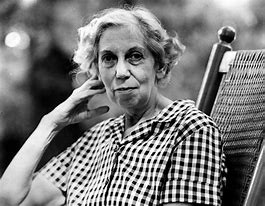
WRITING TIPS from Eudora Welty, born April 13, 1909 (d. 2001)


photo credit: The Paris Review

To write like this:
When they turned off, it was still early in the pink and green fields. The fumes of morning, sweet and bitter, sprang up where they walked. The insects ticked softly, their strength in reserve; butterflies chopped the air, going to the east, and the birds flew carelessly and sang by fits and starts, not the way they did in the evening in sustained and drowsy songs.

Here are some tips:
  • To write honestly and with all our powers is the least we can do, and the most.
  • The first act of insight is throw away the labels.
  • If you haven’t surprised yourself, you haven’t written.
  • One place understood helps us understand all places better.
  • Greater than scene is situation. Greater than situation is implication. Greater than all of these is a single, entire human being, who will never be confined in any frame.
  • No art ever came out of not risking your neck.
  • My continuing passion is to part a curtain, that invisible veil of indifference that falls between us and that blinds us to each other's presence, each other's wonder, each other's human plight.
  • It doesn’t matter if it takes a long time getting there; the point is to have a destination.
  • All serious daring starts from within.

TODAY IN CRIME: April 6, Part two


1970: Two heavily armed criminals shot and killed two CHP officers in Newhall, California during a traffic stop. Two more officers arrived and were gunned down, also. Gunman Bobby Davis fled the scene and was soon arrested. Jack Twinning broke into a house and held an occupant hostage; when deputies surrounded the building, he released the hostage and killed himself.

1975: Denise Oliverson, 24, disappeared from Grand Junction, Colorado. Railroad employees found her bike and shoes under a viaduct the next day but she was never seen again. According to witnesses, just minutes before his execution in 1989 Ted Bundy confessed to murdering her and throwing her body in the Colorado River.

1979: Police in Kathmandu beat and arrested a group of several hundred students gathered to file a protest against the April 4th execution of former Pakistani Prime Minister ZA Bhutto. Student unrest over the next month turned into a countrywide rebellion that led to a national referendum on the party system in Nepal.

1987: Wall Street investment banker Dennis Levine began a two-year jail term for insider trading. His offense warranted a sentence of 5-10 years, but, as the district court judge said, "Through the information he provided, a nest of vipers on Wall Street has been exposed," including Ivan Boesky and Martin Siegel.

1991: Police arrested former child actor Adam Rich (Eight is Enough) for breaking into a Los Angeles pharmacy to steal morphine.

1992: In a rare vote against prosecutors, the U.S. Supreme Court ruled 5-4 that postal agents entrapped Nebraska farmer Keith Jacobson into buying mail-order child pornography.

1994: Surface-to-air missiles shot down a plane carrying Rwandan President Juvénal Habyarimana and Burundian President Cyprien Ntaryamira, abruptly ending peace negotiations and sparking the Rwandan Genocide. Those responsible for the attack have never been identified.

1994: A Manhattan court sentenced Chuck Jones, former public relations aide to Marla Maples Trump, to 1 1/2 to 4 1/2 years in prison for burglarizing the beauty queen's apartment and stealing 70 pairs of her high heels, cowboy boots, slippers, and high-top sneakers in 1992. Police found the footwear stashed under a radiator cover in his office, soiled and ruined. The two had a falling-out over her relationship with real estate mogul Donald Trump, who was married at the time to Ivana.

1998: 24 country music artists filed a trademark infringement and right-of-publicity lawsuit against California businessman Jim Salmon for registering the domain names of the plaintiffs, who included Alan Jackson, Trace Adkins, Bryan White, and Vince Gill. Users were directed to a pornographic website. The artists won the suit in 2003.

2008: Textile workers in Egypt led a general strike protesting low wages and rising food costs. Strikes are illegal in Egypt. Police used tear gas, rubber bullets, and live ammunition against the striking workers and other protesters and killed two. The April 6 Youth Movement formed in the wake of the uprisings eventually sparked the 2011 revolution which brought down the Mubarak regime.

2010: Insurgents from the Communist Party of India (Maoist) attacked officers of the Central Reserve Police Force on an exercise in Dantewada district, a remote part of Central India, killing 76.

2011: Mexican authorities exhumed 59 corpses, victims of the Los Zetas drug cartel, from eight clandestine mass graves in San Fernando, Tamaulipas, Mexico. By June 7 they had exhumed 193. Most were migrant workers.

2013: In an early morning raid, radical Islamic extremists attacked the village of Midlu, Nigeria, including the home of the deputy governor, killing 11 with guns and machetes. The raiders went house to house, calling out people by name and then shooting them or slashing their throats. Boko Haram, the primary extremist network, has been launching attacks since 2009.

2016: In an attempt to slow down sex trafficking, France passed legislation creating fines for people who pay for sex, moving the punishment from the sex worker to the client. A first offense warrants a 1,500-euro fine and subsequent offenses up to 3,750 euros. Offenders may also have to attend a prostitution awareness course.

2018: A bus carrying the Humboldt Broncos, a junior ice hockey team from Humboldt, Canada, collided with a semi-truck in Saskatchewan, killing 16 people and injuring 13 others after the driver of the semi-trailer failed to yield at a flashing stop sign. Jaskirat Singh Sidhu, 29, an inexperienced truck driver, pled guilty to 16 counts of dangerous driving causing death and 13 counts of dangerous driving causing bodily harm, receiving eight years in prison. The owner of the trucking company also faced eight counts of failing to comply with various safety and log-keeping regulations. A GoFundMe campaign for the young victims and their families raised C$15million, a record amount for Canada.

Sunday, April 5, 2020

TODAY IN CRIME: April 6, Part one

photo credit: Britannica

1199: English King Richard I died of gangrene two days after a bolt from a crossbow hit him at the siege of the castle of Châlus-Chabrol in France. On his deathbed Richard forgave his assassin, a boy seeking revenge for the deaths of his father and brothers, but the king’s cohorts flayed him alive and hanged him anyway as soon as Richard died.

1250: Ayyubids, Muslim rulers of Egypt, captured King Louis IX of France and his nobles at the Battle of Fariskur, the last conflict of the failed Seventh Crusade. Louis himself negotiated their release for 800,000 gold coins.

1362: Tard-Venus bandits, mercenaries left unemployed due to a lull in the Hundred Years War who had turned to pillaging the French countryside, destroyed French forces attacking their base at Brignais.

1712: Twenty-three enslaved Africans armed with guns, hatchets, and swords attacked white colonists in New York City, killing nine and wounding six others before they ran off. A militia quickly rounded up and jailed dozens of blacks; six committed suicide, and of the 40 brought to trial, 18 were acquitted and several pardoned. Those found guilty were brutally executed---burned alive, crushed on the wheel, starved, hanged, etc. The revolt resulted only in more laws favoring slaveowners and stricter codes against slaves.

1772: Russia ended the tax on beards instituted by Tsar Peter the Great.

1815: After the War of 1812, British soldiers guarding American prisoners at Dartmoor prison fired upon a large group of unarmed inmates in a barracks yard, killing seven and injuring 31. The guards feared an escape attempt; the prisoners had heard of the Treaty of Ghent signed more three months earlier and were complaining their horrid conditions should have improved until they were repatriated. After the incident, prisoners who could afford passage were freed and the rest sailed home at joint American-British expense.

1895: At the Cadogan Hotel, London, plain clothes policemen arrested popular playwright Oscar Wilde for “committing acts of gross indecency with certain male persons,” a crime in England. The arrest came about after Wilde lost an ill-advised libel suit against the Marquess of Queensberry, who accused him of being a homosexual; enough evidence emerged not only to get the libel charge dismissed but to arrest Wilde. He was given two years of hard labor.

1903: Anti-Semitic riots in Kishinev, Russia, led to the deaths of as many as 120 Jews, with 500 injured. More than 600 Jewish women were raped and 1500 homes and shops destroyed. A Gentile boy had been murdered in a nearby town and anti-Semitic newspapers accused Jews of killing him and mixing his blood into their Passover matzos. Police finally intervened on the third day of rioting. Only two men served more than five years for the massacre.

1903: Evidence emerged that French Army Nationalists forged documents to guarantee a conviction for Alfred Dreyfus, the military officer tried and convicted of treason against France in 1894.

1919: In protest of the Rowlatt Acts that gave almost unlimited power to police and denied civil rights, Mahatma Gandhi called for a nationwide general strike, asking Indians to engage in nonviolent struggle---to observe a daylong fast and hold meetings to demand the repeal of the legislation.

1929: The Louisiana House of Representatives impeached Governor of Louisiana Huey P. Long on charges ranging from misuse of state funds to bribery and blasphemy. Lawmakers suspended the process when it became clear the state senate would not vote for it, and Long served out his term and even became a U.S. Senator.

1930: Mahatma Gandhi and his followers ended their 24-day Salt March protesting the steep salt tax levied by the ruling British Empire. On the shore of Dandi, Gandhi produced salt from sea water, breaking the British law establishing a monopoly on salt manufacture (“With this, I am shaking the foundations of the British Empire.”). Gandhi's non-violent protest galvanized civil disobedience in India and drew international attention to the independence movement.

1931: The first trial of the “Scottsboro Boys,” nine black youths charged with raping two white women, began just three weeks after their arrests. All had barely escaped lynching before their indictments. It was the first day any of the accused were allowed to consult an attorney. Although doctors found no evidence of sexual assault, after three rushed trials, the all-white, all-male juries found eight boys guilty and they were sentenced to death. The ninth and youngest boy, after a mistrial, languished in jail for six years before his release.

1934: Gestapo agents arrested 418 German Lutheran ministers on charges of misusing the pulpit for political reasons.

1968: Two days after the assassination of Martin Luther King, Jr., 6,700 National Guardsmen and 5,000 regular Army soldiers were deployed to help 10,500 police quell riots in Chicago. National Guard troops, Maryland state police, 5,000 Army corpsmen, and an infantry brigade were sent into Baltimore. In Washington, D.C, President Johnson had called in more than 13,000 federal troops and National Guardsmen when crowds overwhelmed the local police force on April 5. Violence erupted in more than 110 cities nationwide from April 4-11 before calm was restored. More than 40 people were killed and 2,500 injured. Some neighborhoods never fully recovered from the arson and looting.

Sunday, March 29, 2020

TODAY IN CRIME: March 30


1866: An attacker clubbed to death 55-year-old Janet Henderson Rogers with an axe while she was visiting her brother Charles Henderson on his farm near Perth, Scotland. Police offered an unheard-of 100-pound reward for information and charged ploughman James Crichton with murder, although a jury returned a verdict of not proven. The verdict drove Charles insane.

1945: Gestapo officers shot 289 anti-fascists in Rombergpark, Dortmund, as part of the mass execution ordered by the SS in the closing days of WWII. The USSR invaded Austria the same day.


1949: A riot broke out in Austurvöllur square in Reykjavík, when Iceland joined NATO. Police used tear gas to disperse protestors.


1965: A car bomb exploded in front of the U.S. embassy in Saigon, killing 22 and wounding 183 others. Congress immediately appropriated $1 million to construct a new building.


1978: London police arrested Paul Simonon and Topper Headon of the Clash for shooting pigeons from the roof of a rehearsal hall.


1979: A car bomb killed British MP Airey Neave as he exited the Palace of Westminster. The Irish National Liberation Army claimed responsibility. On July 2, Parliament declared the INLA illegal across the entire UK as a result of Neave's assassination.


1981: John W. Hinckley Jr. shot and seriously wounded U.S. President Ronald Reagan outside a Washington, D.C., hotel. He also wounded White House Press Secretary James Brady, a Secret Service agent, and a District of Columbia police officer. A D.C. court found Hinckley not guilty by reason of insanity.

1991: William Kennedy Smith, member of the prominent Kennedy family, allegedly raped a woman he met the previous night in a bar. A jury acquitted him after a nationally publicized trial.


1992: A man accidentally backed into Oakland A's outfielder Jose Canseco's $225,000 Lamborghini.

1993: A Sarajevo court sentenced to death two Serb militiamen for murder, rape, and robbery in the first war crimes trial of the Bosnian conflict.

2002: In the first of a series of anti-Semitic attacks during one weekend in France, a group of hooded men rammed two cars into a Lyon synagogue and set the building on fire. No worshippers were injured. The Muslim community denounced the attack as an act of terrorism.


2006: Sunni Muslim insurgents released Christian Science Monitor reporter Jill Carroll after holding her for 82 days. U.S. Marines arrested four Iraqi men on kidnapping charges in August 2006 and the ringleader in 2008.


2009: Twelve Taliban gunmen armed with automatic weapons and grenades attacked the Manawan Police Academy in Lahore, Pakistan. Thirteen people were killed and 100 injured before police recaptured the academy.


2012: Global Payments, a third-party services provider for MasterCard, Visa, American Express, and Discover, announced a massive breach in security that compromised more than ten million credit card numbers.


2013: A dogwalker discovered the body of property developer Kevin Lee in a ditch in Cambridgeshire. He’d been stabbed to death, the first of three men killed by Joanne Christine Dennehy with a pocket knife. Two other stabbing victims survived. Dennehy told friends she wanted to be famous like Bonnie and Clyde. She confessed and was given life without parole, a rare sentence for a woman in the UK.


2017: North Carolina repealed parts of its controversial bathroom law that restricted transgender use. The state had been suffering economically in the previous year with many businesses leaving and organizations moving sporting events and concerts to states with more favorab
le LGBTQ laws.

Sunday, March 22, 2020

TODAY IN CRIME: March 23


1593: The Church of England tried and sentenced English Separatist Puritans John Greenwood and Henry Barrowe for devising and circulating seditious books.

1801: At St. Michael's Castle in St. Petersburg, conspirators rushed the bedroom of Tsar Paul I, struck him with a sword, strangled him, and finally him trampled to death.

1882: The U.S. adopted the Edmunds Act, declaring polygamy a felony and making “unlawful cohabitation” illegal. 1300 men were later imprisoned under the act.

1896: The New York State Legislature passed the Raines Law, restricting the Sunday sale of alcohol to hotels. Tavernkeepers added small bedrooms to their premises and sold rubber sandwiches over and over to circumvent the new law.

1901: Socialist Nikolai Lagovski attempted to assassinate Privy Councilor Konstantin Pobedonostsev, the symbol of Russian monarchal absolutism. Lagovski fired shots through Pobedonostsev’s office window in St. Petersburg, but missed. He was sentenced to six years of hard labor in Siberia.

1908: Korean-American assassins Jeon Myeong-un and Jang In-hwan attacked American diplomat Durham Stevens, an advisor to the Korean government who favored Japanese rule there. Stevens died two days later.

1931: Indian authorities hanged social revolutionaries Bhagat Singh, Shivaram Rajguru, and Sukhdev Thapar for the killing of British police officer John Saunders during the Indian struggle for independence. They intended to kill British police superintendent James Scott, whom they blamed for the death of nationalist leader Lala Lajpat Rai. Their request to be shot by a firing squad was refused.

1965: What began as a peaceful demonstration of Moroccan students demanding their right to public higher education on March 22 turned into an anti-government riot the next day. The Moroccan Army shot and killed as many as 1,000 protestors.

1981: The U.S. Supreme Court upheld a law making statutory rape a crime for men but not women.

1989: A New York court sentenced Joel Steinberg to 25 years for killing his adopted daughter in 1987. The case brought national attention to the issue of child abuse. Steinberg served nearly 17 years.

1990: An Alaska state judge ordered former Exxon Valdez Captain Joseph Hazelwood to help clean up Prince William Sound and pay $50,000 in restitution for the 1989 oil spill.

1994: At an election rally in Tijuana, Mario Aburto Martínez assassinated leading Mexican presidential candidate Luis Donaldo Colosio, the hand-picked successor to President Carlos Salinas de Gortari. Although Martinez was arrested at the scene and confessed, there is widespread belief that President Salinas had grown dissatisfied with his candidate and orchestrated the attack.

1994: A New York prison released Joey Buttafuoco after serving four months for having sex with underage Amy Fisher. Fisher served seven years for shooting Buttafuoco's wife in the head.

1999: Gunmen assassinated Paraguay's Vice President Luis María Argaña, who was set to take over the country once the legislature impeached corrupt President Raúl Cubas. The public blamed Cubas and his cohorts for the attack and forced him to resign.

2005: A major explosion at the BP refinery in Texas City, Texas killed 15 workers and injured 180 others. The Occupational Safety and Health Administration fined BP $21 million for hundreds of safety violations and later imposed an additional $87 million fine for failing to correct them. BP reports it has paid more than $1.6 billion in victim compensation.

2012: The U.S. Army formally charged Staff Sgt. Robert Bales with 17 counts of premeditated murder in the deaths of 17 villagers, more than half of them children, during a shooting rampage in southern Afghanistan.

2016: A GPR investigation of Shakespeare's tomb at Holy Trinity Church in Stratford concluded the Bard's skull probably had been stolen. Rumors started circulating 200 years ago that trophy hunters pinched it.

2018: Facing certain impeachment, Peruvian president Pedro Pablo Kuczynski resigned amid a corruption scandal.

2019: An ethnic Dogon militia disguised as hunters and wielding guns and machetes killed 134 Fulani people and burned down their huts in Ogossagou, Mali. The Dogon blamed the Mali government for not protecting them from terrorists and claimed the villagers were harboring jihadists. In response to the attack, the Mali government, which at the time was hosting U.N. ambassadors on a peacekeeping mission, banned the militia. The Dogon and Fulani have been fighting over water rights for hundreds of years.